
Solar Geyser FAQs for Gauteng Homes and Businesses
Thinking about installing a solar geyser, converting your existing electric geyser or getting an older system working properly? These frequently asked questions explain your options, what affects savings and how to look after your installation.
East Rand Solar Geysers only supplies and installs solar geysers and has been doing only that since 2010. It is “what we do”, not an add-on service. We provide SABS-approved installations, conversions, repairs and maintenance in Gauteng, including the East Rand / Ekurhuleni, Johannesburg North, Johannesburg South, Alberton and Heidelberg.
For advice about your property,
request a free quotation or call 011 363 0707.
What is a solar geyser, and how does it work?
A solar geyser uses sunlight to heat water for your taps, showers and baths. A collector absorbs solar energy and transfers heat to water held in an insulated storage tank. Depending on the system design, circulation happens naturally or through a pump. This is solar water heating, which uses the sun’s heat, rather than a household solar electricity system.
Can my existing electric geyser be converted to a solar geyser?
Yes, many existing electric geysers can be converted if they are compatible and in a suitable condition. We check the tank, capacity, pressure rating and plumbing before recommending a conversion. Retaining a serviceable geyser can avoid an unnecessary replacement. If the existing tank is unsuitable or nearing the end of its service life, a new system may be the better investment.
Will I still have hot water during winter or rainy weather using a solar geyser?
Yes. Solar heating output decreases when less sunlight is available, but our systems include electrical backup to supplement heating during cloudy weather, colder periods or unusually high demand. Correct sizing, insulation and backup scheduling help maintain your hot-water supply while allowing the sun to do as much of the heating as practical.
Is a solar geyser suitable for my home in Gauteng?
Yes, a solar geyser is a practical option if your property has a suitable installation position with good sunlight. We consider your household’s hot-water usage, roof structure, shading, water pressure and existing plumbing before recommending a system. Frost protection is also important in Gauteng. Our aim is to match the equipment to your property and routine so you can make useful savings without overlooking your hot-water needs.
How much does a solar geyser installation cost in Gauteng?
The cost depends on the system type, tank capacity, roof access, pipe distances and work needed to complete the installation. Converting a suitable existing geyser will cost differently from fitting a completely new system. We provide a quotation based on your requirements, helping you understand what is included and compare your options before deciding.
How much can a solar geyser reduce my electricity bill?
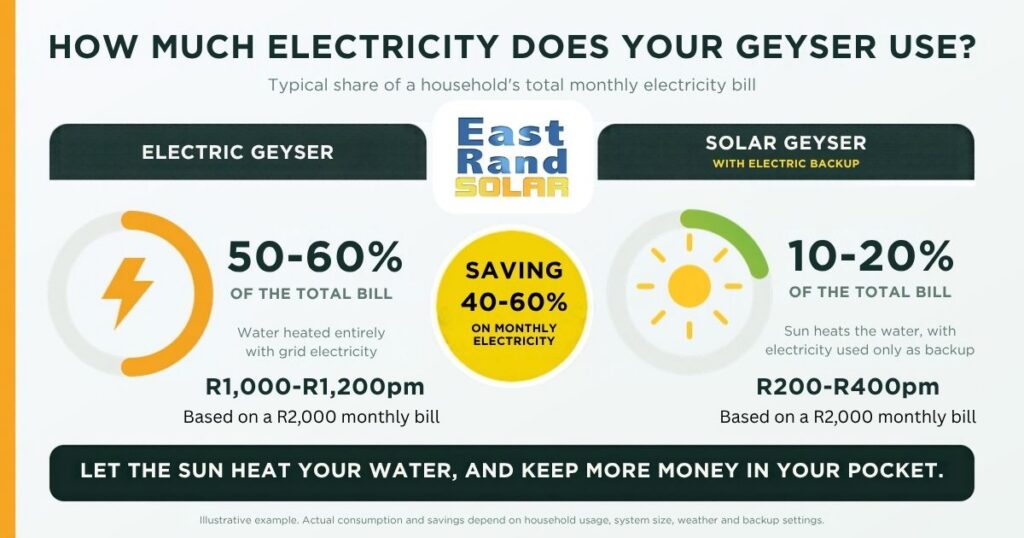
A correctly selected solar geyser can help reduce your electricity costs by replacing much of the element’s heating work with solar heat. Potential savings of approximately 40% to 60% are indicated on our website, but results vary with household usage, sunlight, system size and backup settings. Your total bill also includes other appliances and fixed charges, so savings should be assessed against your actual consumption.
What is the difference between a solar geyser retrofit and a new installation?
A retrofit, also called a solar geyser conversion, adds solar heating equipment to a suitable existing geyser. A completely new installation includes a new storage tank and collector arrangement. We offer split solar geyser conversions and new systems, with the choice depending on your current equipment, property layout and hot-water demand.
Which areas does East Rand Solar Geysers service?
We provide solar geyser installations, conversions, repairs and maintenance in Gauteng. Our service areas include East Rand / Ekurhuleni, Johannesburg North, Johannesburg South, Alberton, Heidelberg and surrounding areas. Contact us with your suburb and the assistance you need so we can confirm availability for your property.
How do I choose the right solar geyser size and system?
The right system depends on more than the number of people in your home. We consider shower and bath habits, when hot water is needed, existing tank capacity, water pressure and available sunlight. Collector size and storage capacity need to work together. A properly matched system helps avoid paying for unnecessary capacity or regularly running short of hot water.
How does a solar geyser retrofit work?
We install a collector in a suitable sunny position and connect it to your existing geyser through additional pipework. Your electrical element remains available for backup. The collector, pump supply and controls depend on the equipment selected for your installation. 12V Solar pump circulating
Does a solar geyser need electricity?
Yes. The collector uses sunlight to produce heat, but electricity is still required for the Geyserwise controller and backup element. Natural-circulation systems have different requirements from pumped systems. We explain how your recommended system operates, what needs power and how electrical backup will work.
Will a solar geyser work during load shedding or a power outage?
Hot water already stored in the tank will remain available if your property has sufficient water supply and pressure. Continued solar heating depends on the system design and the power source for any pump or controller. The electrical backup element cannot operate without electricity. We can explain these limitations when helping you choose a system.
What are the main benefits of solar geyser water heating?
Solar water heating reduces the electricity required for one of your household’s highest energy demands. It can lower running costs, reduce reliance on grid electricity for heating water and make productive use of available sunshine. Using less grid electricity also reduces the environmental impact associated with the electricity displaced.
Can a solar geyser meet all my hot-water needs?
A suitably sized system may supply enough solar-heated water on sunny days without using the electrical element. However, demand, weather and usage times change throughout the year. Several showers close together or prolonged cloudy weather may require backup heating. We recommend planning around dependable year-round use rather than assuming the element will never be needed.
What if my property has more than one geyser?
We can consider multiple geysers as part of your solar water-heating requirements. The best arrangement depends on each tank’s condition, position, capacity and the outlets it serves. Share your existing setup with us so we can discuss suitable conversions or replacements.
Can you install a solar geyser on an existing property?
Yes, solar geysers can be installed on existing homes and business premises as well as new buildings. We assess roof suitability, collector position, pipe routes and the current hot-water installation. This helps determine how the system can be integrated and whether any existing plumbing needs attention.
Do you install solar geyser systems for homeowners, landlords and businesses?
Yes, East Rand Solar Geysers assists residential, commercial and industrial customers. A family home, rental property and business can have very different hot-water requirements. We consider how the property is used and when demand occurs so the proposed installation suits its purpose.
How long does solar geyser installation take?
Generally, the installation will be completed in 1 day. The timeframe depends on the system, roof access, plumbing routes and any corrections needed to the existing installation. A straightforward conversion involves a different scope from a full replacement. We explain the anticipated installation time and any interruption to your hot-water supply when discussing the work.
How long should a solar geyser last?
Service life depends on equipment quality, water conditions, installation and maintenance. The storage tank and collector may remain serviceable longer than components such as valves, pumps or controllers. Regular attention to leaks, insulation and controls helps protect the installation. A guarantee period is separate from the equipment’s potential useful life.
What guarantee does East Rand Solar Geysers offer?
We offer a five-year guarantee, subject to the written terms supplied for your installation. These terms explain the equipment covered, any separate component or workmanship provisions and maintenance requirements. For conversions, we also clarify how the cover applies to the new solar equipment and your retained geyser.
What is the payback period for a solar geyser?
The payback period is the time it takes for accumulated savings to recover the installation cost. A simple estimate divides the installed price by the expected annual saving. Your result depends on electricity tariffs, hot-water consumption, solar performance, backup use and maintenance costs. We can discuss the factors relevant to your quotation rather than promise the same timeframe for every property.
How can I estimate savings over the solar geyser system’s lifetime?
Start with a realistic annual electricity saving and consider how long you expect to use the system. Allow for servicing, possible component replacements and changes in household demand. Electricity tariff changes can also affect the calculation. Comparing these factors gives you a more useful view of long-term value than relying on a best-case daily saving.
Why does SABS testing of solar geysers matter?
Relevant testing helps establish how equipment performs against specified requirements, which may include safety, durability and heating performance. The documentation should relate to the actual product supplied and clearly identify the scope of testing. We can explain the equipment specified in your quotation so you understand what you are buying.
What is the difference between a SABS test report and SABS Mark certification?
A test report records results for the sample assessed and the tests performed. SABS Mark certification involves a broader conformity-assessment process intended to support consistent product quality. The two should not be treated as interchangeable. When comparing quotations, check the certification status of the specific equipment rather than relying only on general claims.
How can I check the quality of the solar geyser system I am buying?
Look for clearly identified equipment, relevant certification, written guarantee terms and an itemised installation quotation. Confirm that the system suits your water pressure, frost exposure and water conditions. Installation experience, after-sales assistance and replacement-part availability also matter. We welcome questions about the proposed equipment before you accept a quotation.
Can I install or repair a solar geyser myself?
Solar geyser work involves pressurised hot water, roof access, plumbing and electrical connections. Installation and repairs should be completed by people qualified for the work involved. Incorrect adjustments can create safety problems, reduce performance and affect warranty cover. Contact us if your system needs attention so we can advise on the next step.
What solar geyser maintenance costs should I allow for?
Maintenance costs depend on the system, its condition and any parts requiring replacement. Checks may identify worn valves, damaged insulation, leaks or circulation problems. Some storage tanks also have specific servicing requirements. We can explain the maintenance needs of your chosen equipment and quote for servicing or repairs when required.
How often should my solar geyser be serviced?
We follow the manufacturer’s maintenance schedule and your guarantee conditions. Discuss an annual inspection with us to establish a suitable servicing interval for your equipment. Arrange an earlier inspection if you notice leaks, unusual discharge, visible damage or reduced heating performance. Addressing a small fault promptly can help prevent further damage.
How can I get more usable hot water and improve winter savings with my solar geyser?
Shorter showers, repaired dripping taps and reduced unnecessary hot-water use can help stored water last longer. Where your routine allows, use more hot water after the day’s solar heating. Suitable pipe insulation and carefully scheduled backup also help. If you regularly run short, we can check the system’s performance, controls and capacity.
Should I trim trees that shade the solar geyser collector?
Reducing shade allows more sunlight to reach the collector. Consider both current shading and how it changes with the seasons. If branches need removal, use an appropriate tree-care professional, particularly near roofs or power lines. You do not need to climb onto the roof to check the collector yourself.
How hot can solar geyser water become?
Strong sunshine can raise stored water well above a comfortable bathing temperature. The temperature depends on sunlight, equipment and how much hot water is used. Appropriate controls and protection against scalding are important. We can explain your system’s recommended storage settings and how delivery temperatures are managed.
Is it safe for children to run their own bath water using a solar geyser?
Young children should be supervised around hot taps and bath water. Solar-heated water can cause serious burns, especially when stored at high temperatures. An adult should prepare and check the water before a child enters the bath.
Why is water dripping from my solar geyser’s overflow pipe?
Some water discharge from an expansion-relief outlet can occur as water heats and expands. Continuous flow, a noticeable increase in discharge or steam needs professional investigation. Different outlets have different functions, so the source must be identified before deciding whether the discharge is normal. Never block or cap a discharge pipe.
What does the pressure-control valve do, and what is the red knob for?
The pressure-control valve regulates incoming water pressure within the system’s specified limits. A knob or lever may serve an isolating or relief function, depending on the valve model. Colour alone does not identify its purpose reliably. Ask us to show you the correct shut-off point and explain which controls you can safely operate.
What should I do if I notice a solar geyser leak or a cracked evacuated tube?
Contact East Rand Solar Geysers to arrange an inspection. Keep people away from broken glass and hot discharge, and avoid climbing onto the roof or attempting a repair. If there is a significant leak, follow the isolation instructions supplied for your installation and seek prompt assistance from us.
How do I choose a solar geyser system that can handle Gauteng’s frost and water conditions?
Choose equipment and an installation design suited to the conditions at your property. Frost protection may involve specific collector designs, controls or heat-transfer arrangements, depending on the system. Exposed pipework also needs attention. Insulation reduces heat loss but should not be assumed to prevent freezing on its own. We consider these factors when recommending equipment.
What does a GeyserWise controller do?
A GeyserWise controller displays water temperature and allows electrical backup heating to be scheduled around your household’s needs. This helps leave time for solar heating while making backup available during selected periods. We include a free GeyserWise controller with every installation and explain the functions available with your particular model.
Can solar water heating help reduce demand on the electricity grid?
Yes, every portion of water heating supplied by sunlight reduces the electricity needed for that task. The effect on peak demand depends on when backup elements operate. Sensible scheduling helps avoid unnecessary electrical heating and allows the installation to make better use of the available solar energy.
Can a solar geyser be included in a new building project?
Yes, planning solar water heating early helps coordinate collector position, roof loading, plumbing routes and maintenance access. It also creates an opportunity to position the system close to the outlets it serves. Your building professional should confirm the current energy-efficiency and approval requirements applicable to the project.
Where do I find answers to questions not covered in this solar geyser FAQs section?
Contact East Rand Solar Geysers for help with questions about solar geyser installations, conversions, repairs or maintenance in Gauteng. Call 011 363 0707, WhatsApp 078 711 1928 or email info@eastrandsolar.co.za. Tell us your suburb and what you need help with so we can offer advice relevant to your property. If you are considering a new system, you can also request a free quotation.
Our Solar Geyser Systems
With a split system installation we use your existing geyser and convert it into a solar geyser.

A new geyser, operating like your existing electrical geyser, except the sun heats the water during the day.

A Free GeyserWise Controller Included With Every Installation
The solar collector provides the renewable energy, but the controller helps the household use that energy intelligently. A GeyserWise controller displays water temperature and allows electrical backup to operate only during programmed periods. Instead of allowing the element to heat water throughout the day, you can schedule support around the times hot water is normally required.
This is particularly useful when early morning showers take place before the day’s solar heating has begun, or when several people use hot water again in the evening. Correct settings help protect comfort while limiting unnecessary electricity consumption. We include a free GeyserWise controller with every qualifying solar geyser installation and explain how to adjust the schedule and temperature settings for the household’s routine.

What our Clients have to say:


 Trustindex verifies that the original source of the review is Google.
 Trustindex verifies that the original source of the review is Google.
 Trustindex verifies that the original source of the review is Google.
 Trustindex verifies that the original source of the review is Google.
 Trustindex verifies that the original source of the review is Google.
 Trustindex verifies that the original source of the review is Google.
 Trustindex verifies that the original source of the review is Google.
 Trustindex verifies that the original source of the review is Google.